








.png)






About the work
Introduction
The genesis of the Tabbouleh Day, initiated in 2001 by Lebanese artist Ricardo Mbarkho, is embedded in a complex and conflict-ridden history. This celebration, far more than a mere gastronomic event, reveals a profound evolution of its meaning over time. It marks a major turning point that not only redefines the role of Tabbouleh in Lebanese culture but also its influence on a universal scale.
Origins and international recognition
At its inception, the primary goal of the Tabbouleh Day was to highlight Lebanon's gastronomic and patriotic reputation while denouncing the degradation of Tabbouleh's image due to counterfeit commercialization abroad. It was in France, where the artist encountered this distortion, that the idea took shape. In 2001, the concept of centralizing the existing energy of the Lebanese people for Tabbouleh was born. Thus, during an online discussion with Allam Sleiman, a friend of Mbarkho, they drafted the first announcement of this new Day, informing around 20,000 Lebanese via email, initiating the rapid spread of the event through chain emails.
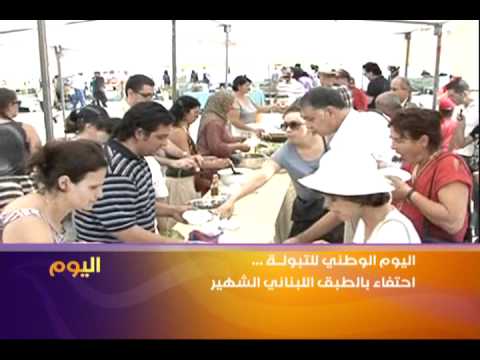
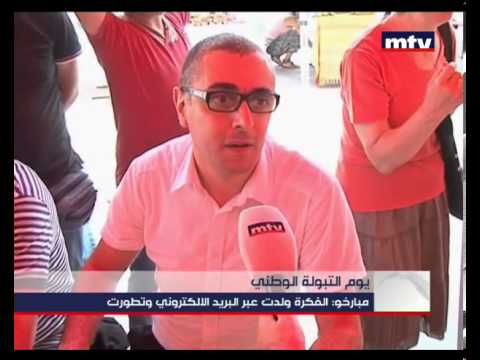
Initially designated as the Lebanese International Tabbouleh Day, the annual event gathers Lebanese people every first Saturday of July, symbolizing their attachment to Lebanon and patriotic pride. Over the years, the celebration has expanded, bringing together hundreds of thousands of participants worldwide. International recognition strengthened with active support from Lebanese and foreign press, as well as presentations at the 15th edition of the Biennale de Paris in 2006 and 2007. In 2007, the Lebanese Ministry of Tourism granted its official approval, consecrating the Day as a national celebration.
Artistic transformation: honoring or resisting power?
The readjustment of Tabbouleh within the context of invisual art, exploring alternative socio-economic models, demonstrates Mbarkho's desire to infuse his creation with a fundamentally artistic essence. This innovative approach transcends the boundaries of visual expression to create a multidimensional experience, where art and gastronomy merge to become tools of resistance against sociopolitical injustices.
Indeed, the genesis and evolution of the Tabbouleh Day demonstrate a deep commitment to the role of art itself, whether to honor or resist power. Mbarkho undertakes a significant artistic transformation by gradually removing the national label from the event, renaming it simply “Tabbouleh Day”. By removing the national label, Mbarkho highlights the importance of preserving traditions while adapting them to a constantly changing contemporary context. This resolutely committed approach questions established norms, refusing to conform to narratives imposed by often oppressive authorities.
This initiative aims to surpass the boundaries imposed by political regimes, constituting an act of resistance, creating a work against the nationalist and communal constraints that hinder Lebanese society. By freeing Tabbouleh from its purely national aspect, the celebration becomes a platform for the redefinition of the dish and our belonging, liberating it from dictatorships and the media, economic, religious, military, and police powers imposing fixed certainties. Mbarkho's artistic resistance is tangible in his desire to liberate Tabbouleh from these constraints, making this day a means of questioning established norms.
The immutable ingredients of Tabbouleh, in this transformation of meaning, now carry opposing meanings: the national and the universal, cultural power and the illusion of that power, war and peace, death and life. Tabbouleh thus becomes a catalyst for reflection, arousing uncertainties, doubts, and awareness of our actions and our place in the world.
Conclusion
The Tabbouleh Day thus transforms into a powerful emblem of artistic resistance, cultural struggle, and the quest for freedom, evolving within a context marked by sociopolitical challenges. Ricardo Mbarkho's innovative approach goes beyond mere culinary celebration, transforming the event into a living work of art. It becomes a means of questioning and subverting the structures imposed by power, ultimately offering a powerful reminder of the transformative power of art in building a freer society. Initiated in 2001, this unique celebration leaves a lasting imprint, a culinary and popular odyssey that transcends geographical and temporal boundaries, as well as artistic boundaries, reaching into economies still free from the grip of the contemporary art market.
KeywordsCelebration. Relation. Communication. Meetings. Invisual.
Held every July since 2001
- 2001–2005, 2009, 2018–2026: Action via Internet
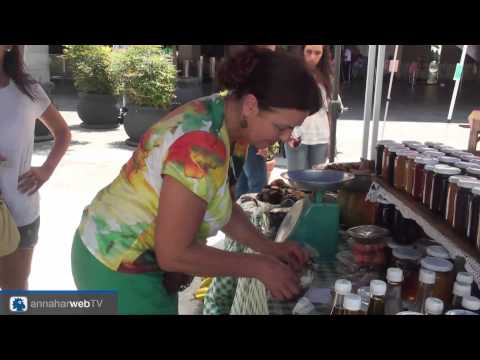
- 2007–2008, 2010–2015, 2017: Action via Internet and at Souk el Tayeb, Beirut, Lebanon
- 2016: Action via Internet and, in the frame of the Biennale de Paris in Beirut, at Souk el Tayeb, Beirut, Lebanon
- 2006: Action via Internet and at the Biennale de Paris, France
In the press
- 2001The Tabbouleh FestivalSaveurs · Magazine
- Jul 2004Let’s all celebrate tabbouleh!La Presse · Newspaper · Laura-Julie Perreault
- Jul 2006Our favourite salad, consecrated as a work of artL’Orient-Le Jour · Newspaper · Maya Ghandour Hert
- Jul 2007“Tabboulehers” of the world, unite!L’Orient-Le Jour · Newspaper · Maya Ghandour Hert
- Jul 2007Tabbouleh on its National DayAl Balad · Newspaper · Christie Abou Farah
- Jul 2007Tabbouleh at the ready, get set, go!L’Orient-Le Jour · Newspaper · Carla Henoud
- Jul 2007Beirut celebrates the “National Tabbouleh Day”Asharq Al-Awsat · Newspaper · Maroun Haddad
- Dec 2007Ricardo Mbarkho: “You must live your work and not just contemplate it”iLoubnan · Online magazine · Diana Kahil
- Jan 2010Interview / Biennale de Paris: is “another art” possible?Particules · Magazine · Anne-Lou Vicente
- Jul 2010The “Lebanese” National Tabbouleh Day… bringing together what wars have separatedAl Balad · Newspaper · Doris Saad
- Jul 2011Lebanese National Tabbouleh DayAl Hurra · Television · Tony Naddaf